
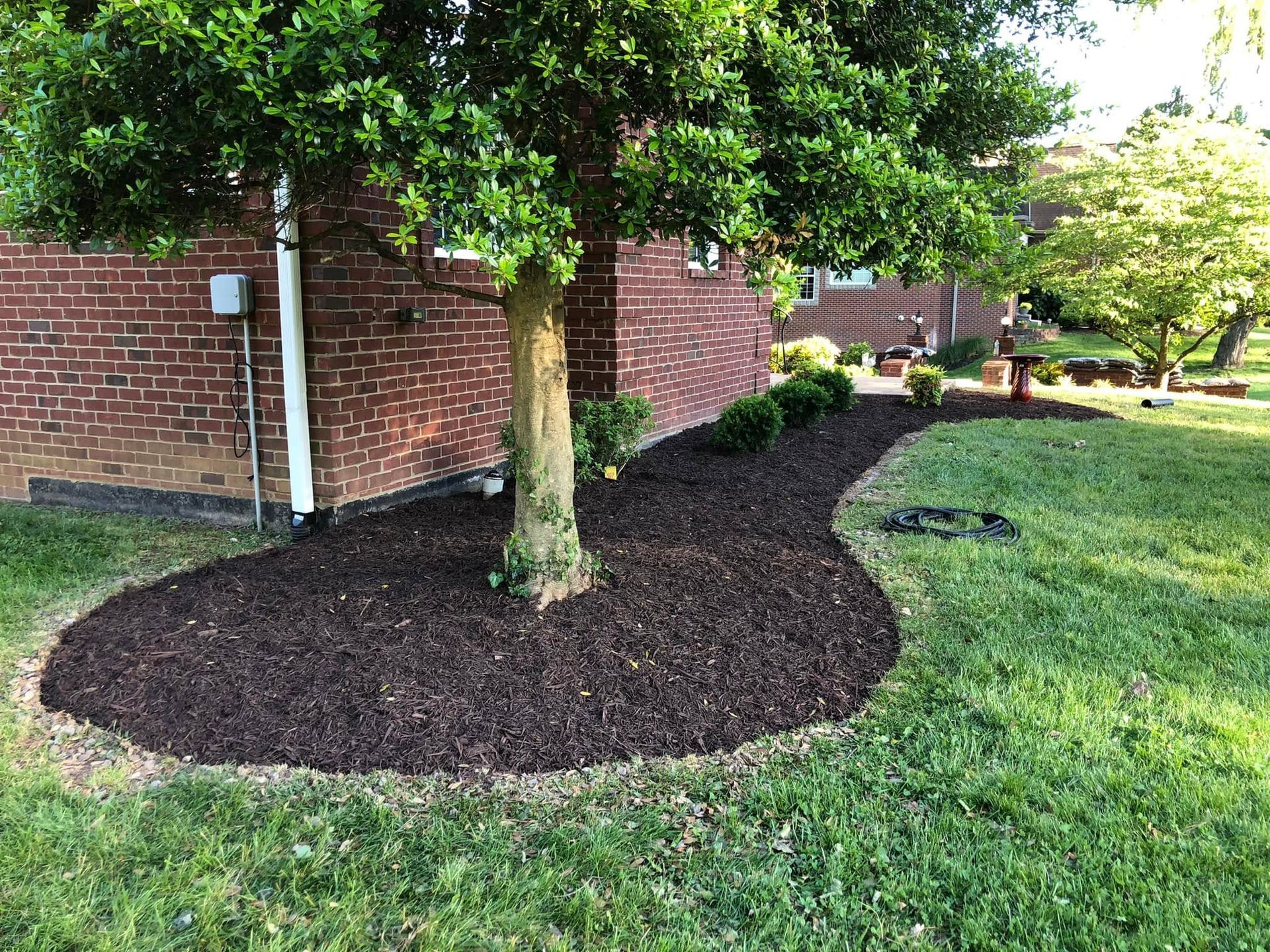
Trees Removed Without Damaging Your Property
Tree Work in Bowling Green for damaged, overgrown, or hazardous trees affecting safety and access
Storm-damaged limbs hanging over rooflines, overgrown trees blocking sunlight from lawns, and dead trunks leaning toward structures create safety hazards that worsen with every weather event. Tree work addresses these risks through careful removal that protects surrounding landscaping, structures, and utility lines. Turf & Dirt LLC handles tree removal projects in Bowling Green using rigging techniques and sectional cutting that control how each piece comes down, preventing damage to fences, driveways, and adjacent plantings.
The process begins with evaluating lean angles, decay patterns, and proximity to structures to determine the safest removal approach. Equipment selection depends on access constraints, tree size, and whether the trunk can be felled in one piece or must be dismantled from the top down in manageable sections.
Request a free estimate to review which trees pose risks and what removal approach fits your property layout.
How Tree Removal Addresses Safety Concerns
Professional tree work involves more than cutting trunks at ground level—it requires planning fall zones, using ropes to control limb descent, and coordinating cuts to prevent barber-chairing or unpredictable splitting. Trees near power lines, those with internal rot that isn't visible from the outside, and specimens leaning toward buildings all require rigging systems that lower sections vertically rather than allowing gravity-directed falls.
Once removal is complete, you'll notice improved sunlight penetration that allows grass to grow in previously bare areas, eliminated trip hazards from surface roots, and restored clearance around structures that were being crowded by expanding canopies. The work opens sightlines, improves air circulation, and removes the ongoing concern about limbs failing during storms.
Tree removal decisions should account for whether stumps will be ground out or left in place, how debris will be processed and removed, and what replanting or landscape restoration might follow. The scope varies based on whether you're clearing land for construction, eliminating specific hazards, or thinning overgrown areas.
Answers to Frequent Service Questions
Tree removal projects raise practical questions about process, timing, and what to expect on your property.
What determines whether a tree should be removed or trimmed?
Structural decay, more than fifty percent dead canopy, root damage from construction, severe lean toward structures, and species that produce constant maintenance problems all favor removal over ongoing trimming.
How is tree work performed near structures without causing damage?
Rigging systems using ropes and pulleys allow controlled lowering of sections, chainsaw cuts are sequenced to prevent binding or unexpected movement, and drop zones are cleared before any cutting begins.
When is the best time to remove trees in Bowling Green?
Late fall through early spring offers frozen or firm ground that supports equipment, leafless canopies that reduce weight and improve visibility, and scheduling before storm season when weakened trees are most likely to fail.
Why do some trees require more complex removal than others?
Height, lean angle, proximity to obstacles, internal rot, and access limitations all affect whether a tree can be felled directly or must be dismantled in sections using climbing or aerial equipment.
What happens to the wood and debris after removal?
Logs can be cut into firewood lengths and left on-site, trunks can be hauled away for disposal, and brush is typically chipped or removed as part of comprehensive cleanup.
Turf & Dirt LLC evaluates each tree's condition, location, and risk factors to determine the removal method that protects your property and completes the work efficiently. Contact our team to schedule an assessment of trees that concern you and receive a detailed project estimate.