
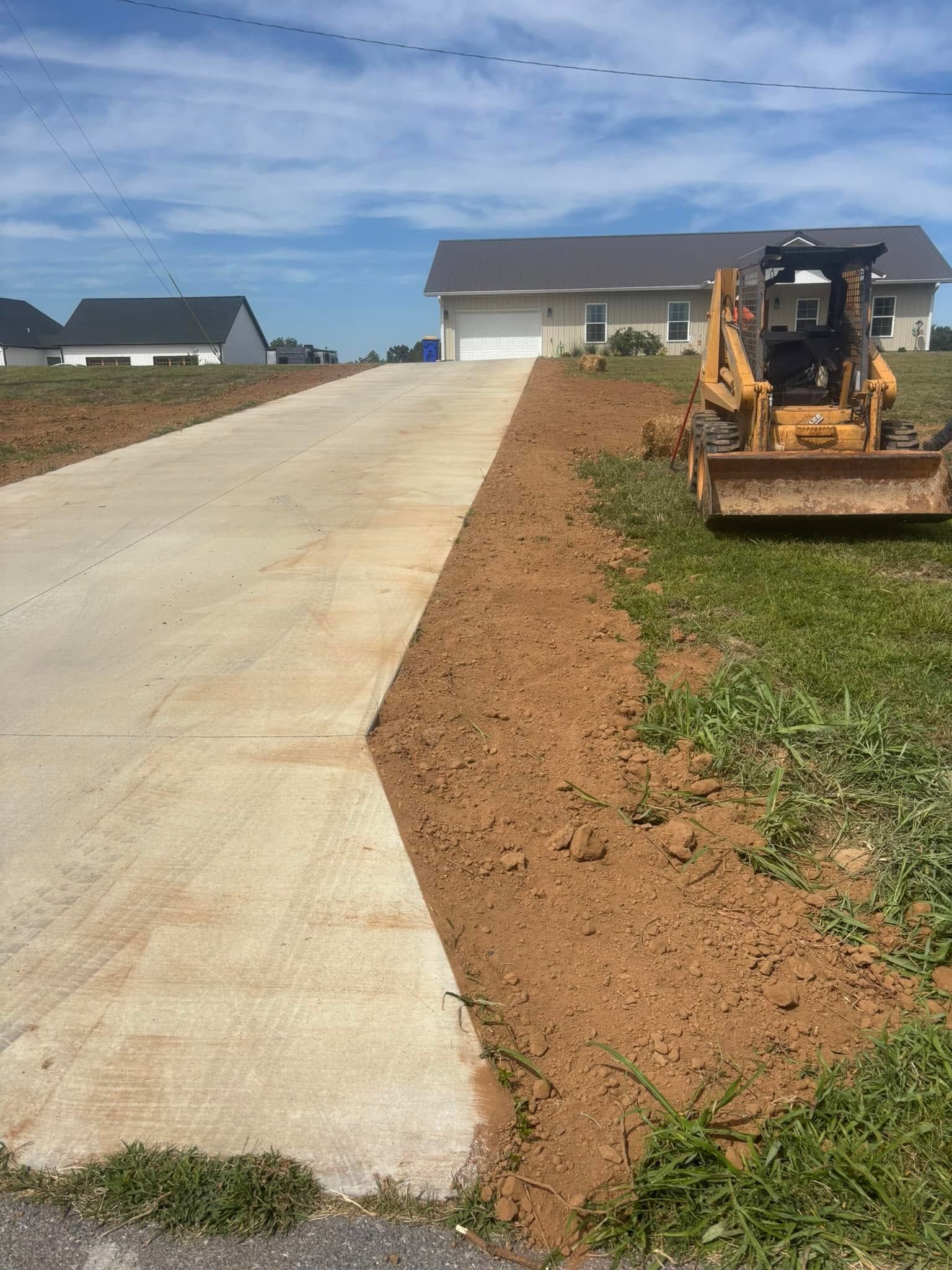
Ground Shaped for Proper Water Flow
Grading and Land Leveling in Bowling Green for properties needing drainage improvement and construction site preparation
Uneven terrain with depressions that collect water, slopes that direct runoff toward foundations, and rough ground that prevents equipment access all require grading to make properties functional and buildable. Turf & Dirt LLC reshapes land in Bowling Green using grading equipment that cuts high spots, fills low areas, and establishes slopes that direct water away from structures toward appropriate discharge points. The work transforms properties from unusable rough ground into surfaces ready for landscaping, construction, or agricultural use with drainage patterns that prevent long-term water damage.
Land leveling involves more than pushing dirt around—it requires calculating finish elevations that provide positive drainage, compacting fill to prevent settling, and establishing grades that match existing site features like driveways and utility connections. Kentucky's clay subsoil requires proper moisture management during grading to avoid creating compaction layers that block water infiltration.
Request a grading estimate to review your property's current elevations and what reshaping will accomplish.
What Grading and Leveling Actually Accomplishes
The process starts with surveying existing elevations to identify where water currently flows and where finish grades need to be established. Equipment selection depends on project scale—compact excavators handle residential lots with access constraints, while larger dozers and motor graders tackle multi-acre sites. Precision grading for construction pads requires finish work with laser-guided equipment to meet engineered specifications.
After grading, you'll notice that water no longer stands in low spots after rain, building pads are level and properly elevated above surrounding grade, and access routes are smooth enough for vehicles and equipment. Proper grading eliminates the ongoing erosion that occurs when water flows uncontrolled across uneven terrain, cutting gullies that worsen with each storm.
Successful land leveling accounts for final use—construction sites need stable, compacted pads that won't settle under building loads, agricultural ground requires slopes gentle enough for equipment operation, and landscape areas need finish grades that support healthy drainage without creating erosion channels. Topsoil management is critical; stripping and stockpiling topsoil before grading subsoil prevents burying fertile material under infertile clay.
Common Questions About This Service
Property owners planning grading projects want to understand what the work involves and how it changes site functionality.
What's the difference between rough grading and finish grading?
Rough grading establishes major elevation changes and drainage patterns using heavy equipment, while finish grading smooths surfaces to final elevations for landscaping, paving, or construction.
How does grading improve drainage on flat properties?
Even properties that appear level need subtle slopes—typically one to two percent grade—to move water toward drainage structures or property edges rather than allowing it to pond.
When should grading be performed relative to other site work?
Grading happens after clearing and demolition but before construction, paving, or landscaping, ensuring proper elevations are established before finish work begins.
Why does Kentucky clay require special grading considerations?
Clay becomes impermeable when overworked at high moisture content, creating drainage problems even on properly sloped ground, so timing grading during drier periods prevents compaction issues.
What permits or plans are required for grading work?
Projects altering drainage patterns, exceeding certain cut or fill volumes, or near waterways in Bowling Green may require erosion control permits and engineered grading plans showing proposed elevations and drainage flow.
Turf & Dirt LLC uses precision equipment and proper sequencing to reshape land for optimal drainage and usability, accounting for soil conditions and intended use. Contact us to schedule a site evaluation and discuss grading solutions that prepare your property for its next phase of development.